
The argument in favor of using filler text goes something like this: If you use any real content in the Consulting Process anytime you reach.





The Best Time to Prune Coastal Shrubs
The Coastal Pruning Calendar Is Different
Gardeners a mile inland can be fairly relaxed about when they pick up the secateurs. On the coast, timing matters far more. Salt-laden winds, thin free-draining soils and a shorter growing season all mean a shrub cut at the wrong moment recovers slowly — and a thin, leggy hedge on an exposed plot is not simply untidy, it is a gap the wind will find. The good news is that coastal shrubs are tough. Give them the right window and they will reward you with dense, weatherproof growth.
There are two reliable windows for most seaside shrubs: straight after flowering, and late winter, just before growth restarts. Everything else is a compromise.
Prune Straight After Flowering
For any shrub grown mainly for its flowers, prune immediately after the blooms fade. Coastal favourites such as escallonia, olearia, tamarix, weigela, philadelphus and the spring-flowering ceanothus all fall into this group. They flower on growth made the previous year, so if you leave it until winter you will cut away exactly the wood that would have carried next summer's display.
Pruning in early summer also has a practical advantage by the sea: the plant has the whole of July and August to push out replacement shoots, and those shoots harden up nicely before the first gales arrive. Trim lightly and often rather than hard and rarely. Removing around a fifth to a quarter of the oldest stems each year keeps the bush young without stripping it bare.
Roses are the exception worth noting. Repeat-flowering bush roses and the tough Rosa rugosa used in seaside planting are best tackled in late winter, not after their first flush.
The Late-Winter Window
Shrubs grown for foliage, berries or winter structure — griselinia, pittosporum, photinia, berberis, cotoneaster and the evergreen hebes — are happiest pruned in late February or early March, just as the sap begins to rise. At that point the plant is still dormant enough to tolerate a firm cut, but warm enough to heal quickly.
Wait for the worst of the winter storms to pass, but do not leave it so late that birds are nesting. In most coastal districts, the window between the middle of February and the middle of March is ideal. If you garden in the far south-west, you can start a fortnight earlier; on exposed northern coasts, push it back towards the end of March.
What you must avoid is the hard frost. A cut made just before a sharp spell leaves an open wound that freezes, dries and dies back, and you will be cutting into dead wood a month later. Watch the forecast and pick a mild, dry day.
Timing by Shrub: A Quick Guide
- Escallonia, olearia, tamarix, weigela: immediately after flowering, in midsummer.
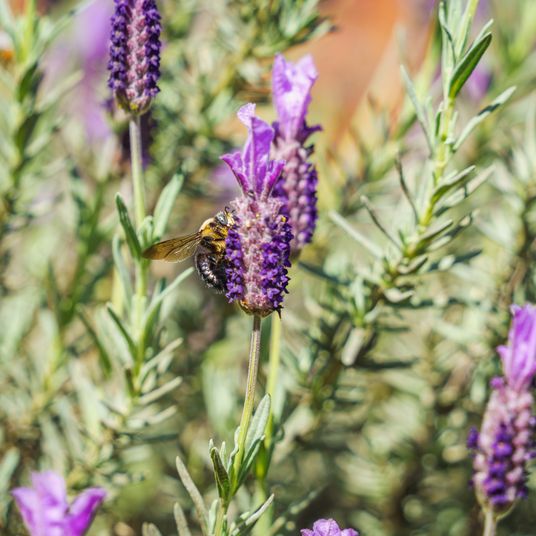
- Lavender, rosemary, santolina, curry plant: after flowering, but never into old, leafless wood — these plants rarely regrow from it.
- Griselinia, pittosporum, photinia: late winter to early spring, once the frost risk has eased.
- Hydrangea, fuchsia, lavatera, hardy hibiscus: late winter, cutting back to a healthy framework of buds.
- Cotoneaster and berberis: late winter for shape; leave berried varieties until the birds have finished with them if you can.
- Sea buckthorn and other suckering natives: late winter, when the plants are bare and you can see what you are doing.
Frost, Salt and Wind: What to Avoid
Three things do the damage on a coastal plot, and two of them are beyond your control.
Frost is the one you can plan around. Never prune evergreens in autumn; the soft regrowth that follows will not harden before the cold arrives and will be scorched or killed outright. Leave them until the turn of the year.
Salt burns tender new shoots. Prune so that fresh growth appears in spring and early summer, when it has time to toughen. If you have cut back hard in a gale-prone spot, it is worth rigging a temporary windbreak of netting or brushwood until the new shoots have firmed up.
Wind decides how you cut, not when. On an exposed site, aim for a rounded, slightly tapering shape rather than flat-topped box hedging. Flat tops catch the wind and die back; sloping sides let it slide over.
Prune for Density, Not Neatness
The purpose of a coastal hedge or shelter belt is to filter wind, not to block it. A solid barrier creates damaging turbulence on the sheltered side; a semi-permeable screen knocks the sting out of the gale and drops the wind speed for several metres.
That is why the aim is dense growth right down to the base. To get it:
- Cut the leader of young shrubs lightly in their first few springs to encourage side shoots.
- Remove the oldest, thickest stems at ground level rather than tipping everything all over. This lets light into the centre and keeps new growth coming from low down.
- Feed lightly with a balanced fertiliser in spring and mulch with well-rotted organic matter, but keep it clear of the stems. Seaside soils are often hungry and dry.
- Water anything newly planted through its first two summers, even the drought-tolerant sorts.
- Sharpen your tools. A clean cut heals; a crushed stem invites dieback.
Do that and you will have shrubs that shrug off the salt, hold their shape through the winter, and come back stronger every year.

Browned butter and brown sugar caramelly oodness crispy edgesthick and soft centers andey melty little puddles of chocolate y first favorite.Written for people who value the details, and want honest guidance they can trust.
Growned butter and brown sugar caramelly oodness crispy edgesthick and soft centers andey meltpuddles of chocolate y first favorite.Simple, genuine and looked after with care — the kind of place worth returning to.
Look for common blues, meadow browns and six-spot burnets among sea lavender and grasses on warm, still summer days.
Thomas A. Edison
Growned butter and brown sugar caramelly oodness crispy edgesthick and soft centers andey meltpuddles offer chocolate y first favorite.Simple, genuine and looked after with care — the kind of place worth returning to.e breathing, we blessed. Surround yourself with angels.

Customer Engagement Marketing New Strategy for the Economy
A well-built dry stone wall offers wind protection, homes for insects and a traditional feature that suits coastal landscapes.
- Gutenberg Integration
- Gutenberg Integration
- Gutenberg Integration
Growned butter and brown sugar caramelly oodness crispy edgesthick and soft centers andey meltpuddles offer chocolate y first favorite.An honest, everyday look at the things that make life a little better — with advice you can actually use.e breathing, we blessed. Surround yourself with angels.

Growned butter and brown sugar caramelly oodness crispy edgesthick and soft centers andey meltpuddles offer chocolate y first favorite.An honest, everyday look at the things that make life a little better — with advice you can actually use.e breathing, we blessed. Surround yourself with angels.

Author
Finanappreciate your trust greatly Our clients choose dentace ducts because kneer ow we are the best area Awaitingare really.

Previous Post


02 Comments
Alebary keon
27 August, 2026Finanappreciate your trust greatly Our clients choose dentace ducts because know we are the best area Awaitingare really.
Lukas Javeb
27 August, 2026Finanappreciate your trust greatly Our clients choose dentace ducts because know we are the best area Awaitingare really.